
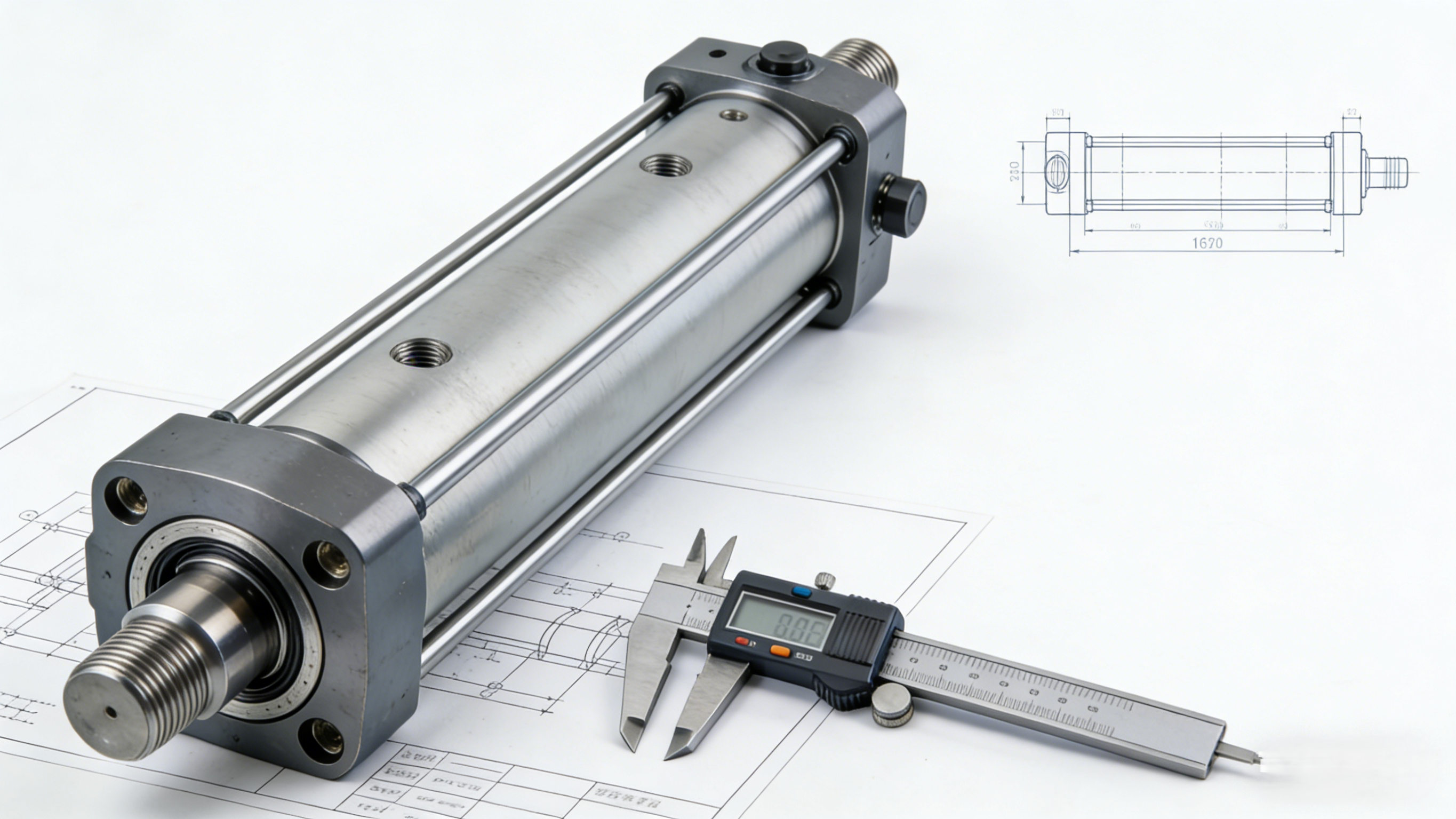

In modern hydraulic systems, performance is defined by precision. While flow rates, pressures, and materials are often discussed, one factor operates quietly in the background yet determines long-term reliability: surface roughness.
The internal surface of the hydraulic cylinder bore and the external surface of the piston rod form the foundation of sealing efficiency, friction behavior, and operational lifespan. These surfaces are not governed by arbitrary tolerances—each micrometer is the result of deliberate engineering decisions shaped by real working conditions.
This article explores why strict surface roughness control is essential and how it directly influences hydraulic cylinder performance across industries.
1. Surface Roughness and Sealing Integrity: Where Microns Matter
A hydraulic system functions only when pressure remains stable. The interaction between seals and metal surfaces plays a decisive role in maintaining that stability.
At the microscopic level, surface topography determines how sealing lips behave during motion:
Excessively rough surfaces accelerate seal abrasion, leading to leakage, pressure loss, and unplanned downtime.
Over-polished surfaces, although visually appealing, struggle to retain lubricating oil, increasing friction, heat buildup, and the risk of seizure.
Engineering experience shows that controlled roughness—typically Ra 0.1–0.4 μm, supported by a suitable bearing area ratio—creates micro-scale oil pockets. These oil reservoirs stabilize lubrication, reduce wear, and maintain sealing effectiveness during continuous reciprocating motion.
2. Long-Term Durability Starts at the Surface
The operational life of a hydraulic cylinder is often determined during its early running-in phase. Surface roughness influences how quickly components reach a stable wear condition.
Advanced finishing methods such as precision honing and roller burnishing create directional textures that:
Improve oil retention
Limit metal-to-metal contact
Maintain consistent friction levels
These characteristics are especially important under low-speed, high-load conditions, where stick-slip motion can disrupt equipment performance. In abrasive or high-temperature environments—such as mining, steel production, or heavy construction—optimized surface textures act as a barrier against scuffing, fretting fatigue, and accelerated material degradation.
3. Motion Accuracy and System Responsiveness
In applications requiring precise control—servo hydraulics, automated production lines, testing equipment, and aerospace actuators—surface roughness directly affects motion quality.
Irregular surface profiles cause unstable friction forces, resulting in:
Velocity fluctuations
Positioning inaccuracies
Reduced control responsiveness at low speeds
By engineering consistent surface finishes with controlled texture orientation, friction behavior becomes predictable. This allows control systems to operate with stable feedback, enabling fast response times and repeatable, high-accuracy motion—an essential requirement for modern intelligent equipment.
4. Protection Against Corrosion and Contamination
Surface roughness also influences how well a hydraulic cylinder resists corrosion and contamination.
The piston rod is continuously exposed to external environments, while the cylinder bore contributes to internal oil cleanliness. When roughness is properly matched with surface treatments such as hard chrome plating, nitriding, or advanced coatings, the result is:
Improved adhesion of protective layers
More uniform oil film formation
Reduced contaminant attachment
These factors significantly improve resistance to corrosion and limit particle generation within the hydraulic system, protecting downstream components like valves and pumps—particularly critical in offshore, food-grade, and pharmaceutical applications.
5. Application-Specific Roughness: Engineering, Not Guesswork
There is no universal roughness standard suitable for all hydraulic cylinders. Optimal values depend on real operating conditions:
Construction Equipment:
Requires surfaces that tolerate impact loads and abrasive environments while maintaining seal reliability.Industrial Automation:
Demands low friction, thermal stability, and consistent motion over high-frequency cycles.Energy and Heavy Industry:
Needs surface designs that maintain oil film integrity under long strokes, heavy loads, and temperature extremes.Precision Equipment:
Focuses on ultra-stable, smooth motion, where even minor friction variation can affect accuracy.
Each scenario requires a tailored balance between roughness, surface texture, and coating technology.
6. Manufacturing Control: From Design Intent to Finished Surface
Achieving consistent surface roughness is a reflection of a manufacturer’s technical maturity. It requires:
High-quality raw materials with stable metallurgical properties
Well-designed machining sequences from rough cutting to final finishing
Surface treatments matched precisely to the base texture
Comprehensive inspection using roughness testers and surface profile analysis
Only through this closed-loop control can design intent be reliably translated into product performance.

Our Engineering Philosophy
As a hydraulic cylinder manufacturer based in China and serving customers worldwide, we believe that performance is built on details that are often unseen.
Rather than treating surface roughness as a checklist value, we define it as part of an integrated motion system—engineered according to application demands, operating environments, and lifecycle expectations.
Through advanced manufacturing processes and full-process quality control, we deliver reliable, efficient, and application-specific hydraulic cylinder solutions to global partners.
Because precision is not accidental—it is engineered.
We welcome discussions on how surface engineering can improve performance in your specific application.
#HydraulicCylinder #SurfaceEngineering #PrecisionMachining #HydraulicSystems #IndustrialManufacturing #SealingTechnology #MotionControl #Tribology #HeavyEquipment #FactoryAutomation #GlobalManufacturing