
Engineering the force, precision, and reliability behind modern construction equipment
Introduction: The hidden force behind construction productivity
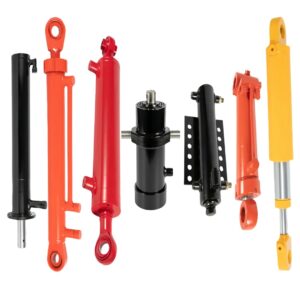
In today’s construction machinery industry, performance expectations continue to rise. Equipment must operate under heavier loads, tighter project timelines, and increasingly harsh environments—while maintaining safety and efficiency. At the center of this challenge are hydraulic cylinders, the core components responsible for converting hydraulic energy into precise, controlled linear motion.
From excavators shaping infrastructure to cranes lifting at extreme heights, hydraulic cylinders directly influence machine productivity, reliability, and lifecycle cost. Understanding how these components are applied, specified, and evolving is essential for OEMs, fleet operators, and global equipment buyers.
Why hydraulic cylinders are indispensable in construction machinery
Compared with mechanical or pneumatic actuation systems, hydraulic cylinders offer a unique combination of advantages ideally suited to construction applications:
1. High force density in compact designs
Hydraulic systems leverage the incompressibility of fluid to generate very high output forces from relatively compact components. This allows construction machinery—often constrained by space and weight—to deliver powerful digging, lifting, and pushing capabilities without compromising machine balance or mobility.
2. Precise and controllable motion
Modern cylinder designs, combined with advanced valve control, enable smooth, accurate motion even under fluctuating loads. This precision is critical for tasks such as:
Controlled excavation and grading
Stable crane lifting and positioning
Uniform paving and compaction
Accurate cylinder response directly impacts job quality, safety, and operational efficiency.
3. Durability under extreme operating conditions
Construction sites expose equipment to dust, moisture, shock loads, temperature extremes, and continuous duty cycles. Hydraulic cylinders engineered with high-strength materials, advanced surface treatments, and robust sealing systems are capable of maintaining performance and sealing integrity under these demanding conditions.
Application-specific roles across construction machinery
Different machines place very different demands on hydraulic cylinders. Matching cylinder design to application is therefore a key engineering consideration.
Excavators: Precision and power in digging operations
Excavators rely on multiple cylinders—boom, arm, and bucket—to perform complex movements under variable loads. These cylinders must balance:
High breakout force
Smooth modulation for fine positioning
Resistance to side loads and abrasive contamination
Depending on machine size and configuration, excavator cylinders may feature welded constructions, optimized rod diameters, and seal systems designed for intensive cycling.
Wheel loaders and dozers: Efficient material handling
Loaders and dozers require cylinders that deliver fast response while maintaining force consistency during lifting, tilting, and pushing operations. Key design considerations include:
Stable speed under varying loads
Shock resistance when operating on uneven terrain
Long fatigue life under repetitive cycles
Well-matched cylinder systems contribute directly to higher throughput and reduced operator fatigue.
Cranes and lifting equipment: Safety-critical performance
In cranes and telehandlers, hydraulic cylinders are safety-critical components. They are responsible not only for lifting loads but also for holding them securely in position. Typical requirements include:
Load-holding or counterbalance valve integration
High fatigue resistance for long service life
Precision manufacturing to minimize internal leakage
Cylinder reliability in these applications directly affects personnel safety and regulatory compliance.
Road construction equipment: Consistency and surface quality
Pavers, compactors, and rollers depend on hydraulic cylinders to deliver uniform force distribution. In these applications, cylinder performance influences:
Surface flatness and compaction density
Vibration control and operator comfort
Repeatability across long working hours
Stable hydraulic behavior helps ensure consistent construction quality over large-scale projects.
Selecting the right hydraulic cylinder: Key engineering considerations
For OEMs and international buyers, cylinder selection goes beyond basic dimensions. Critical evaluation factors include:
Material quality and heat treatment for strength and fatigue resistance
Rod surface protection (e.g., chrome or alternative coatings) to combat corrosion and wear
Seal design and contamination control to extend service intervals
Mounting configuration and alignment to minimize side loading
Testing and quality assurance including pressure, fatigue, and leakage testing
A well-specified cylinder reduces total cost of ownership by lowering failure risk and maintenance frequency.
Maintenance practices that extend service life
Even the best-designed cylinder benefits from proper maintenance. Effective practices include:
Routine visual inspections for leaks, rod damage, and contamination
Maintaining clean hydraulic fluid through filtration and scheduled replacement
Ensuring correct installation alignment to prevent uneven wear
Planned refurbishment before seals or surfaces reach critical failure points
Preventive maintenance strategies significantly improve equipment uptime and operating efficiency.
Emerging trends shaping the future of hydraulic cylinders
As construction machinery evolves, hydraulic cylinder technology continues to advance in parallel.
Smart and sensor-integrated cylinders
Position, pressure, and temperature sensors are increasingly integrated into cylinder assemblies. These systems support:
Real-time condition monitoring
Predictive maintenance strategies
Improved automation and machine control
Such capabilities align with the industry’s move toward intelligent and connected equipment.
Energy efficiency and system optimization
New hydraulic circuit designs and energy-recovery concepts aim to reduce power losses during operation. Improving system efficiency contributes to:
Lower fuel or energy consumption
Reduced heat generation
Extended component life
Sustainability and lifecycle thinking
Manufacturers and buyers alike are paying greater attention to sustainability. This includes:
Durable designs that extend service life
Repairable and rebuildable cylinder constructions
Materials and processes aligned with environmental standards
Lifecycle-oriented design is becoming a key procurement consideration for global fleets.
Conclusion: Hydraulic cylinders as strategic components
Hydraulic cylinders are far more than standard components—they are strategic elements that define how construction machinery performs in real-world conditions. Proper application, engineering selection, and forward-looking design choices directly influence productivity, safety, and long-term operating costs.
Partnering with a supplier that understands both application demands and evolving industry trends is essential. As construction projects grow in scale and complexity, hydraulic cylinder expertise will remain a decisive factor in machine reliability and competitive performance.

#HydraulicCylinders #ConstructionMachinery #Hydraulics #HeavyEquipment #Excavator #WheelLoader #Crane #RoadConstruction #OEMManufacturing #ConstructionEquipment #IndustrialEngineering #MadeInChina #GlobalSupplyChain #B2BManufacturing