
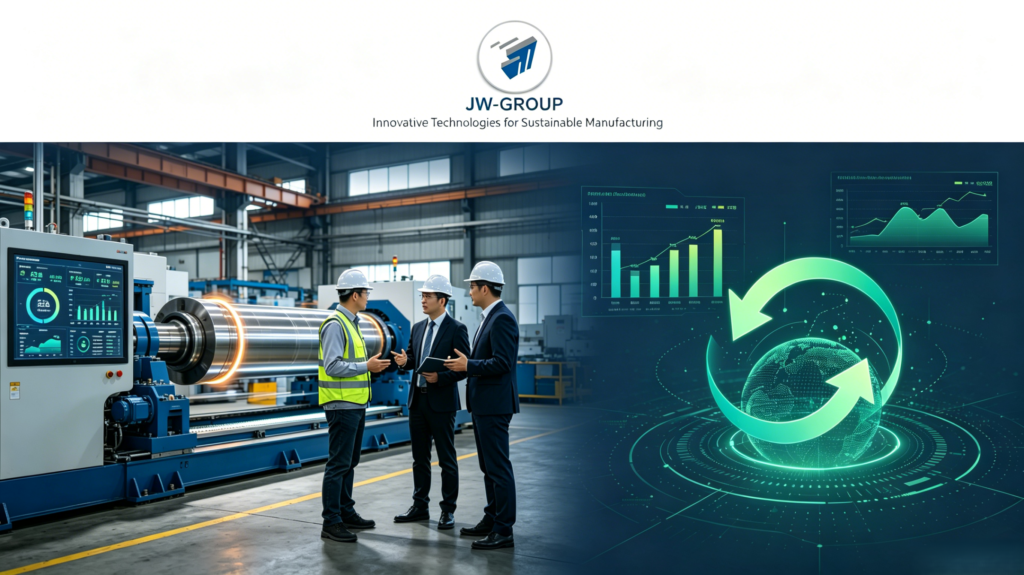
Why CBAM Matters for Hydraulic Cylinder and Steel Tube Suppliers
As the European Union accelerates its carbon reduction strategy under the European Green Deal, the Carbon Border Adjustment Mechanism (CBAM) is becoming one of the most important regulatory developments affecting global industrial manufacturing and cross-border supply chains.
For companies exporting steel-related industrial products to Europe, CBAM introduces growing expectations around:
- Product Carbon Footprint (PCF) reporting
- Carbon emissions transparency
- Supply chain traceability
- Sustainable sourcing
- ESG compliance readiness
- Low-carbon manufacturing practices
For manufacturers of hydraulic cylinders, honed tubes, stainless steel tubes, and precision-machined steel components, these changes are reshaping both procurement requirements and long-term supplier competitiveness.
At JW Hydraulic, we believe low-carbon manufacturing is no longer only an environmental initiative — it is becoming a critical factor in global industrial sourcing decisions.
Understanding CBAM: Current Scope, Reporting Requirements, and Future Trends
What Is CBAM?
The Carbon Border Adjustment Mechanism (CBAM) is a carbon pricing framework introduced by the European Union to reduce “carbon leakage,” which occurs when carbon-intensive production shifts outside Europe to regions with less stringent environmental regulations.
CBAM is designed to create a more balanced carbon cost structure between EU manufacturers operating under the EU Emissions Trading System (EU ETS) and overseas exporters supplying products into the European market.
CBAM Timeline
Transitional Phase (2023–2025)
Since October 2023, importers of covered products have been required to submit quarterly reports detailing embedded greenhouse gas emissions associated with imported goods.
During this phase:
- No direct CBAM certificate payments are required
- Importers must collect supplier emissions data
- Carbon reporting methodologies are gradually standardized
- Supply chain transparency becomes increasingly important
Definitive Phase (Starting 2026)
Beginning in 2026:
- Importers will need to purchase CBAM certificates
- Verified emissions data becomes increasingly important
- Financial exposure related to carbon intensity increases
- Free EU ETS allowances will gradually phase out toward 2034
This means carbon emissions will increasingly influence the actual landed cost of imported industrial products.
Which Products Are Currently Affected?
At present, CBAM mainly focuses on upstream industrial sectors including:
- Iron and steel
- Aluminum
- Cement
- Fertilizers
- Hydrogen
- Electricity
For steel-related products, many items under HS Codes 72 and 73 are already closely associated with CBAM reporting requirements, including:
- Precision steel tubes
- Honed tubes
- Stainless steel tubes
- Seamless steel tubing
- Cold-drawn steel tubes
For manufacturers and importers of these products, the ability to provide reliable emissions data is becoming increasingly important.
Why Product Carbon Footprint (PCF) Data Matters
One of the most critical concepts under CBAM is Product Carbon Footprint (PCF).
PCF refers to the total greenhouse gas emissions generated throughout a product’s lifecycle, including:
- Raw material extraction
- Steelmaking processes
- Tube processing
- Cold drawing
- Heat treatment
- Honing operations
- CNC machining
- Welding
- Surface treatment
- Assembly and testing
For industrial buyers, accurate PCF data helps improve:
- Carbon compliance readiness
- Procurement transparency
- ESG reporting
- Supply chain risk management
- Long-term cost forecasting
Under the CBAM framework, when actual verified emissions data cannot be provided, importers may need to rely on EU default values for emissions calculations.
In many cases, these default values can be significantly higher than real manufacturing emissions, potentially increasing carbon-related import costs.
This is why more European OEMs are actively requesting emissions transparency and traceability from suppliers.
Why Hydraulic Cylinders and Downstream Components Are Drawing More Attention
Currently, finished hydraulic cylinders and precision-machined assemblies are not yet directly included within the mandatory CBAM tariff scope.
However, broader market expectations are rapidly evolving.
Many European equipment manufacturers are already incorporating carbon management requirements into supplier evaluations for:
- Hydraulic cylinders
- Hydraulic power systems
- Machined steel components
- Heavy-duty industrial assemblies
- Construction equipment components
- Mining machinery parts
- Marine hydraulic systems
This shift is being driven by several factors:
1. Scope 3 Emissions Pressure
Many large OEMs are now focusing on Scope 3 emissions, which include indirect emissions generated throughout their supply chains.
As a result, suppliers of downstream industrial products are increasingly being asked to provide:
- Product Carbon Footprint data
- Supplier sustainability documentation
- Carbon reduction roadmaps
- Material traceability information
2. ESG Procurement Requirements
Global industrial groups are strengthening ESG procurement standards to improve sustainability reporting and investor transparency.
Low-carbon manufacturing capability is becoming a competitive differentiator during supplier qualification processes.
3. Future Regulatory Expansion
Although hydraulic cylinders are not currently under mandatory CBAM tariffs, many industry observers expect carbon reporting requirements to gradually extend further downstream over time.
Forward-looking manufacturers are therefore proactively preparing for future compliance expectations.
How JW Hydraulic Supports Low-Carbon Industrial Supply Chains
With more than 20 years of manufacturing experience, JW Hydraulic specializes in:
- Custom hydraulic cylinders
- Welded hydraulic cylinders
- Heavy-duty hydraulic cylinders
- Hydraulic cylinder parts
- Honed tubes
- Stainless steel tubes
- Precision-machined steel components
Our products are widely used across:
- Construction machinery
- Mining equipment
- Metallurgical systems
- Marine & offshore equipment
- Agricultural machinery
- Material handling systems
- Industrial hydraulic equipment
Leveraging vertically integrated production capabilities, we continuously improve manufacturing transparency and sustainability across our operations.
Our Approach to Carbon Management
1. Product Carbon Footprint (PCF) Tracking
Based on international standard, we are improving emissions tracking across:
- Tube processing
- Cold drawing operations
- Honing processes
- CNC machining
- Welding operations
- Surface treatment
- Cylinder assembly and testing
2. Supply Chain Traceability
We are strengthening raw material traceability systems to improve transparency regarding:
- Steel sourcing
- Material certifications
- Production batches
- Manufacturing energy consumption
3. Sustainable Manufacturing Initiatives
Our ongoing manufacturing optimization efforts include:
- Energy efficiency improvement
- Material utilization optimization
- Scrap reduction
- Digital energy monitoring
- Lean manufacturing processes
We are also actively communicating with third-party organizations regarding data transparency and verification readiness.
The Future of Hydraulic Manufacturing Is Becoming More Transparent
The hydraulic manufacturing industry is entering a new era where supplier competitiveness will increasingly depend on:
- Engineering capability
- Product quality
- Manufacturing consistency
- Delivery reliability
- Sustainability readiness
- Carbon transparency
As global supply chains continue evolving, industrial buyers are increasingly seeking manufacturing partners capable of supporting both operational performance and long-term sustainability goals.
At JW Hydraulic, we remain committed to continuously improving our manufacturing capabilities, product quality, and low-carbon supply chain readiness to support OEM customers worldwide.
About JW Hydraulic
JW Hydraulic is a China-based manufacturer with over 20 years of experience in hydraulic cylinders, honed tubes, stainless steel tubes, and precision-machined hydraulic components.
We provide one-stop hydraulic solutions for global industries including construction, mining, metallurgy, marine, and heavy industrial equipment manufacturing.
If you are looking for a reliable hydraulic cylinder manufacturer or honed tube supplier with strong engineering capability, vertically integrated production, and long-term sustainability readiness, feel free to contact our team.
#CBAM #HydraulicCylinder #HonedTube #StainlessSteelTube #LowCarbonManufacturing #HydraulicSolutions #OEMManufacturing #IndustrialManufacturing #CarbonFootprint #SustainableManufacturing